Pricing
Blog
Sign Up
Contact
Read more about our vision
for the future of Law
The Kill Switch and the Citation
Albanese wants a US-China AI treaty with kill switches, but who verifies what the system outputs?
Australian Lawyers Distrust AI More Than Anyone. The Data Suggests They're Right To.
InfoTrack data reveals Australian law firms lag on AI adoption. Global tools don't reflect how local practitioners work.
When Judges Start Asking What AI Could Do for Them
Australia's top judges met researchers to identify which judicial tasks AI could take on, moving past warnings to practical design.
When the Client Has Already Talked to the Chatbot
A quarter of 18-24 year olds with a legal problem turned to an AI chatbot, not a lawyer.
The Wrong Question
The Claude watermark tells you a model touched the text. It doesn't tell you whether the text is right. Verification is the lawyer's job either way.
The cursor hovers: privacy, confidentiality, and the price of upload
Before uploading client files to a legal AI tool, Australian practitioners must understand privacy obligations, confidentiality duties, and regulatory risk.
The Apprenticeship We Automated Away
AI handles document review once given to juniors, yet hiring stays flat. Habeas examines what Australian legal AI means for the next generation.
AI in Australian Law: The Distance Between the Demo and the Desk
AI in law promises to transform practice, but what are Australian firms really deploying? We compare advertised features with real-world adoption.
Australia's AI Framework: Sound Policy, Impossible Advice
Which laws actually govern AI in Australia? We map the voluntary standards, proposed guardrails, and regulator guidance practitioners need to track.
The model is the easiest thing to compare and the least important thing to get right
Model benchmarks rank legal AI systems, but the model is the least important part. Learn why search, retrieval, and RAG architecture dictate output quality.
An AI Agent Beat a Barrister at the FWC.
A computing academic beat Macquarie's lawyers at the FWC with ChatGPT and Claude. What does this mean for AI-assisted litigation in Australia?
The PMS Handles the Matter. It Does Not Handle the Law.
Your practice management system runs the matter, but it cannot research the law.
When the Judge Does the Fact-Checking
A Federal Circuit judge tested ChatGPT against his own judgment and got the AI to confess it fabricated key details.
Principles Are Not Compliance: The EU Has Now Proved It
AI vendor contracts rely on principles clauses. But the EU's enforcement action against general-purpose AI shows principles alone won't protect Australian
When the Underwriter Can't Sign the Pleadings
NewMod firm Crosby is insuring AI agent outputs to eliminate lawyer review. But can underwriters truly absorb the liability? Habeas examines the risks.
The CPS Hallucination and the Limits of "Verify Everything"
The CPS filed AI-hallucinated case citations in a UK High Court extradition appeal.
Hallucinated Scepticism: General-Purpose AI Fabricates Critique the Same Way It Fabricates Case Citations
General-purpose AI fabricates critique as confidently as it invents case citations.
The Verification Tax Is the Wrong Frame
When clients use AI tools that fabricate case law, lawyers face a dilemma. Habeas explores why verification shouldn't become a new billable category.
Why a Lawyer Will Never Trust an AI That Won't Show Its Work
Lawyers demand authority citations, not blind trust. Discover why transparency in AI legal research is non-negotiable for Australian practitioners.
The Chatbot That Played Lawyer
A Federal Circuit litigant's reliance on an AI chatbot nearly resulted in contempt charges. Learn why purpose-built legal AI differs from generic chatbots.
"Trained on Australian Law" Is a Requirement, Not a Differentiator
Australian legal AI tools claim to be trained on local law, but that's just the baseline.
When "We Used AI" Becomes a Compliance Position
Australia ends voluntary AI governance. New mandatory standards, an Office of AI, and legislation coming in 2026.
The AI Rules That Apply to Australian Lawyers Were Not Written in Canberra
The Albanese government committed to legislated AI standards, but lawyers can't wait until 2027.
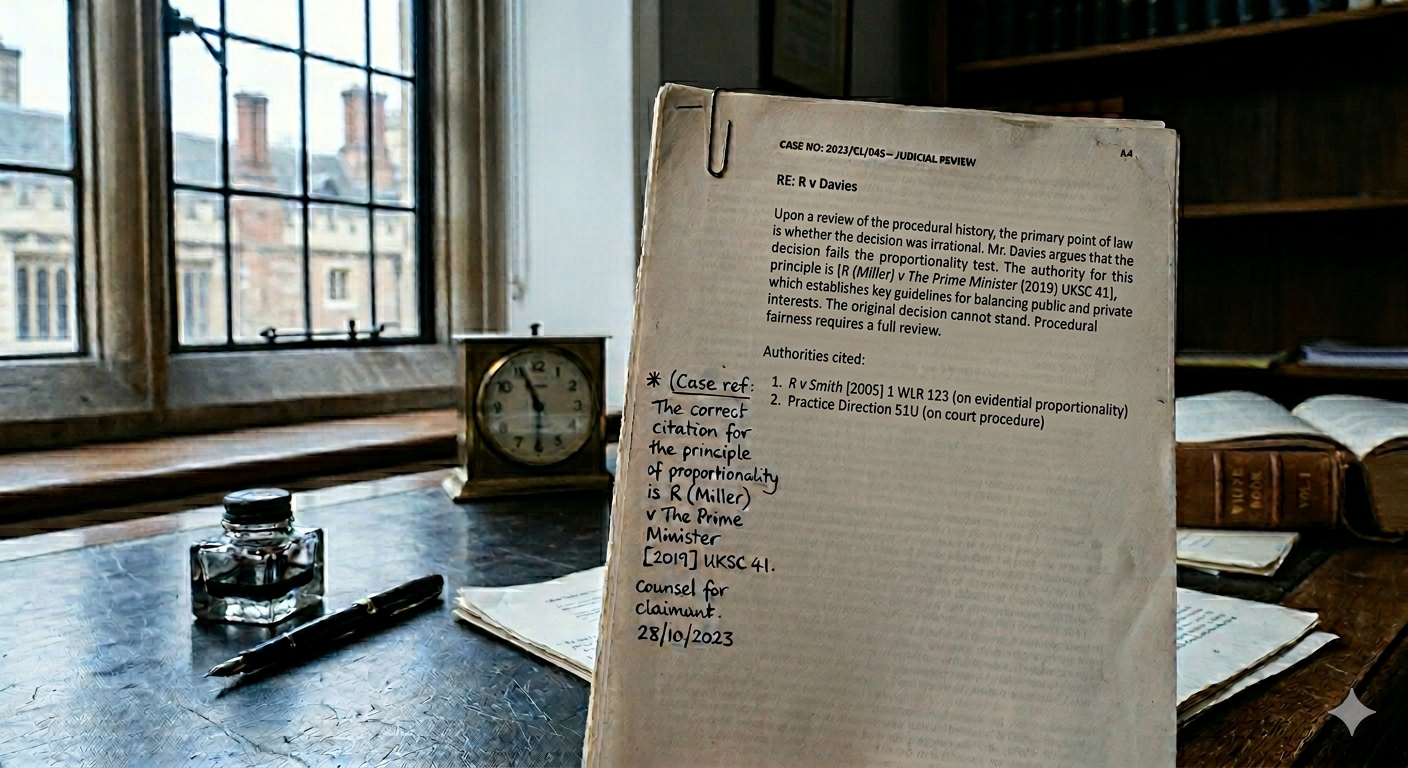
The Hallucination Is in Their Submissions, Not Yours
Over 96 Australian cases now show AI-generated fake citations in court submissions. Learn how to spot hallucinations and protect your practice with Habeas.
AI Is a Knowledge Problem Before It Is a Technology Problem
Gilchrist Connell's new chief AI and knowledge officer role shows why Australian law firms must treat AI as a knowledge problem.
Australian Legal AI Has a Trust Problem, Not a Literacy Problem
Australian law firms are adopting AI faster than they can verify its accuracy.
85 Per Cent Is Not a Progress Report
Progress Software's latest survey shows 85% of lawyers use AI, yet 77% still work manually and lack governance.
Giving Business Advice That Survives the Question "Where Did That Come From?"
How to give confident business advice that cites verified Australian law sources.
Ninety-Six Decisions, Seventy-Two Litigants in Person
The AI Hallucination Cases database now tracks 96 Australian decisions involving hallucinated material. 72 involve self-represented litigants.
Thomson Reuters Concedes the Point, Now Read the Fine Print
Thomson Reuters admits generic AI tools can't compete on legal research.
What Garfield Won
An AI-only UK law firm won a contested trial. What does this mean for Australian lawyers and regulators?
The ACCC Has Put a Number on AI Hype
The ACCC has doubled maximum penalties to $100m for misleading AI claims.
Where Legal AI Will Be Won or Lost
Mid-tier firms face pressure to match CBD rates without the resources. Legal AI changes that equation.
The Demo Looked Good. Then Came the Call from Opposing Counsel.
Thomson Reuters data shows 91% of legal organisations underdeliver on AI. Discover why impressive demos don't translate to real-world courtroom wins.
The Hallucination Conundrum and Responsible use of Legal AI
The hallucination problem in legal AI is real, but is not unsolvable. Responsible law firms use tools custom-built for Australian legal research and designed for our system of jurisprudence to achieve the best outcomes and mitigate risk.
Criminal Law, Preparation Burden and the Practical Value of Legal AI
A brief analysis of how Criminal lawyers are leveraging Habeas to achieve incredible results for their clients, based on interviews.
The Right Architecture, the Wrong Jurisdiction
Can AI reliably trace how courts have treated precedent? Habeas explores why deterministic legal AI outperforms language models for case authority
Restraint-of-Trade Research for Commercial Lawyers: How Semantic Search Changes the Brief
Advising on restraint-of-trade clauses requires precision. Discover how semantic legal AI helps Australian lawyers research enforceability and scope with
Context Without Traceability
Sam Kidd warns of AI sprawl in legal research. Context and workflow, not model power, determine whether AI advice is reliable. Discover why on Habeas.
A Director's Guide to AI Governance: What It Asks, and What It Assumes
The AICD's second edition demands directors allocate AI accountability. But what happens when the AI work itself cannot be traced?
The Model Is Not the Moat
General-purpose AI tools fail Australian lawyers on jurisdiction-specific details.
When the Tribunal Hallucinates: The Essel Infraprojects Ruling and What It Changes
India's Supreme Court ruling on tribunal-generated hallucinations challenges the assumption that AI errors are always lawyer error.
Buying Legal AI Is Not the Same as Using It
Acquiring legal AI software is just the first step. Learn why adoption, training, and integration matter more than the tool itself.
The Verb Spellbook Shouldn't Have Used
Spellbook claims to automate contracts end-to-end. But does autonomous contract management deliver on its promise for Australian lawyers?
The 7 Percent Problem
Why 82% of legal teams use AI but only 7% have scaled it to maturity. Habeas explores the verification gap holding back Australian legal AI adoption.
Habeas vs ChatGPT for Legal Workflows: What Australian Lawyers Actually Need
How Habeas and ChatGPT compare for Australian legal research, drafting and review, and why grounded citations and court rules make the difference.
The Compliance Clock Most Legal AI Vendors Haven't Set
The OAIC's new transparency rules for automated decisions apply to legal AI tools. What compliance obligations do Australian law firms face?
The AI Sovereignty Debate Has an Australian Answer
Why generic AI tools fail Australian practitioners and why controlling your legal AI stack is critical.
When an AI Finds the Clause and Misses the Standard
LegalOn's 2026 benchmark reveals general-purpose AI finds contract clauses but fails on legal nuance across 3,282 reviews. Why Australian legal AI matters.
The In-House Counsel Revolution No One Is Talking About
In-house counsel are solving legal questions in hours instead of weeks using Australian legal AI.
The Query That Returns Thursday
Employment, privacy and contract questions don't always need external counsel.
Three Practice Areas in a Fortnight
Solo practitioners juggle family law, criminal and conveyancing advice daily. Discover how Australian legal AI helps sole practitioners research across employment, commercial disputes, and property.
Account of Profits vs Damages in IP Infringement: Election, Apportionment, and the Practitioner's Choice
IP infringement? You must choose between damages or account of profits. no remedy, no going back. Learn how the election works and why practitioners choose either.
A Closed Corpus Is a Security Control
General-purpose AI tools risk exposing confidential legal documents. Discover why a closed-corpus legal AI platform protects sensitive client information.
"Trained on Australian Law" Is Not a Compliance Answer Anymore
Australia rejected a text-and-data mining exception, meaning legal AI tools must prove their right to use training data.
When Both Sides Filed Fabricated Citations: A Warning Australian Practitioners Cannot Dismiss
A US judge cancelled an entire case after both legal teams admitted filing AI-hallucinated citations unread.
The Buying Criterion Gartner Buried
Gartner forecasts legal tech spending will double by 2028, driven by AI adoption. What integration criterion did analysts identify as essential? Discover below.
Hallucination Is Not the Problem
AI tools deliver confident answers that look reliable. But hallucination isn't the real risk. Discover what Australian legal teams should actually watch.
The Research File That Arrives Ready
How readers and clerks use Australian legal AI to prepare annotated research files over a weekend. Cut preparation time and cite every authority.
Brief Landed. Now What? How Barristers Use AI to Triage Complex Matters in Hours, Not Days
A 600-page brief lands three days before a hearing. How Australian legal AI helps barristers distil complex matters into a clear view of what actually matters, in hours, not days.
Nine Protocols and Counting: Australia's AI Court Compliance Map Is Now Too Complex to Hold in Your Head
Nine separate AI frameworks across NSW and federal courts as of May 2026. Why Australian legal AI platforms must automate compliance tracking.
After the Clock Runs: What It Actually Takes to Win an Extension Under s 394(3)
Missed the 21-day unfair dismissal deadline? Section 394(3) allows extensions only in exceptional circumstances. Learn what courts actually require to.
Extension of Time Applications: The Precedent Research Problem Litigators Know Too Well
Researching persuasive authority for extension of time applications across jurisdictions takes hours manually. Discover how Australian legal AI cuts.
Winning the Judgment Is the Easy Part
Won a judgment but the debtor won't pay? Discover your enforcement options in Australia, from garnishee orders to bankruptcy proceedings.
Occupiers' Duty of Care in Australia: What the Law Expects, and Where Practitioners Get Caught
What duty of care do occupiers owe visitors and trespassers? We clarify the common law framework and how legislation codifies it across Australian states.
The Question Nobody Asked: Directors, Section 180, and the Duty That Rewards Curiosity
Section 180 of the Corporations Act imposes a duty of care and diligence on company directors. Learn what this duty requires, how courts assess it, and.
AI Legal Research for Australian Lawyers: How to Pin Down Procedural Authority Fast
Procedural authority is scattered across rules, directions, and case law—and one missed change risks your practice. See how Australian legal AI finds.
De Facto Property Settlement Under the Family Law Act: Rights, Thresholds, and Timeframes
De facto property settlement under the Family Law Act requires strict threshold conditions before you can even apply. Learn the 2-year rule, registered.
Consent Orders Family Court Process: Formalising Property Settlements Without Contested Proceedings
Consent orders under the Family Law Act seal agreed property settlements and prevent future claims. Learn why informal agreements alone won't protect.
Caveat Removal Grounds and Procedure Under Section 74 of the Real Property Act 1900 (NSW)
How are caveats removed in NSW? Section 74B lapsing and s 74MA court orders explained. Learn grounds, procedure, and compensation risks for practitioners.
Casual Conversion to Permanent Employment Under the Fair Work Act
Employers must offer permanent roles to long-serving casuals with regular, systematic patterns.
AI Legal Research Australia: Why ChatGPT Is the Wrong Tool for the Job
ChatGPT confidently produces fake case citations and misrepresents holdings. Learn why general AI tools are dangerous in Australian legal work and what.
AI Legal Research Australia: How to Assess Restraint of Trade Enforceability
Restraint of trade enforceability analysis is fact-sensitive and risky without complete case authority. Discover how Australian legal AI helps.
The Business Judgment Rule Safe Harbour Under Section 180(2) of the Corporations Act
Section 180(2) of the Corporations Act protects directors from care and diligence liability, but only if all four conditions are met.
AI Legal Research and Restraint of Trade: What the Tool Does, What Only You Can
Can AI answer 'is this restraint enforceable?' alone? No. Learn what Australian legal AI does best—and what requires your judgment—in restraint of trade.
Binding Financial Agreement Enforceability: The Statutory Framework and Where Agreements Fail
A binding financial agreement is enforceable only if it meets statutory procedural requirements and survives set-aside grounds. Learn what makes a BFA.
A Lawyer is Not a Job
Every Aussie lawyer's use case and workflow is distinct. The right Legal AI tool should feel 'built for you'.
The Accuracy Numbers Legal AI Vendors Cite Don't Mean What You Think
Legal AI vendors cite 90%+ accuracy rates, but what do those numbers actually measure? Discover why these claims are often unverifiable and what to ask.
Researching Limitation Periods Across Australian Jurisdictions
Limitation periods vary by state and cause of action. Discover which Act applies, how discoverability rules work, and when courts extend deadlines.
Global Legal AI Has an Australia Problem
Global legal AI tools claim jurisdiction expertise, but Australian firms face critical gaps. Discover why offshore AI training fails in Australian law.
Bail Application in NSW: The Statutory Framework and Risk Assessment Under the Bail Act 2013
Bail applications in NSW turn on proving no unacceptable risk under the Bail Act 2013. Learn how the statutory framework works, key risk criteria, and.
Adverse Possession in NSW: The 12-Year Rule Explained
Can you claim land ownership after 12 years of occupation in NSW? Adverse possession still exists but is much narrower on registered land. Here's what.
How the AAT Reviews Commonwealth Decisions: A Practical Guide
Unhappy with a government decision on visa, Centrelink, NDIS or tax? The AAT review process lets you appeal to an independent tribunal.
What Is Contributory Negligence in Australia?
Partly at fault for your injury? Contributory negligence in Australia reduces your claim by your share of responsibility.
Will Legal AI replace junior lawyers?
Legal AI, contrary to popular opinion, augments the role of junior lawyers.
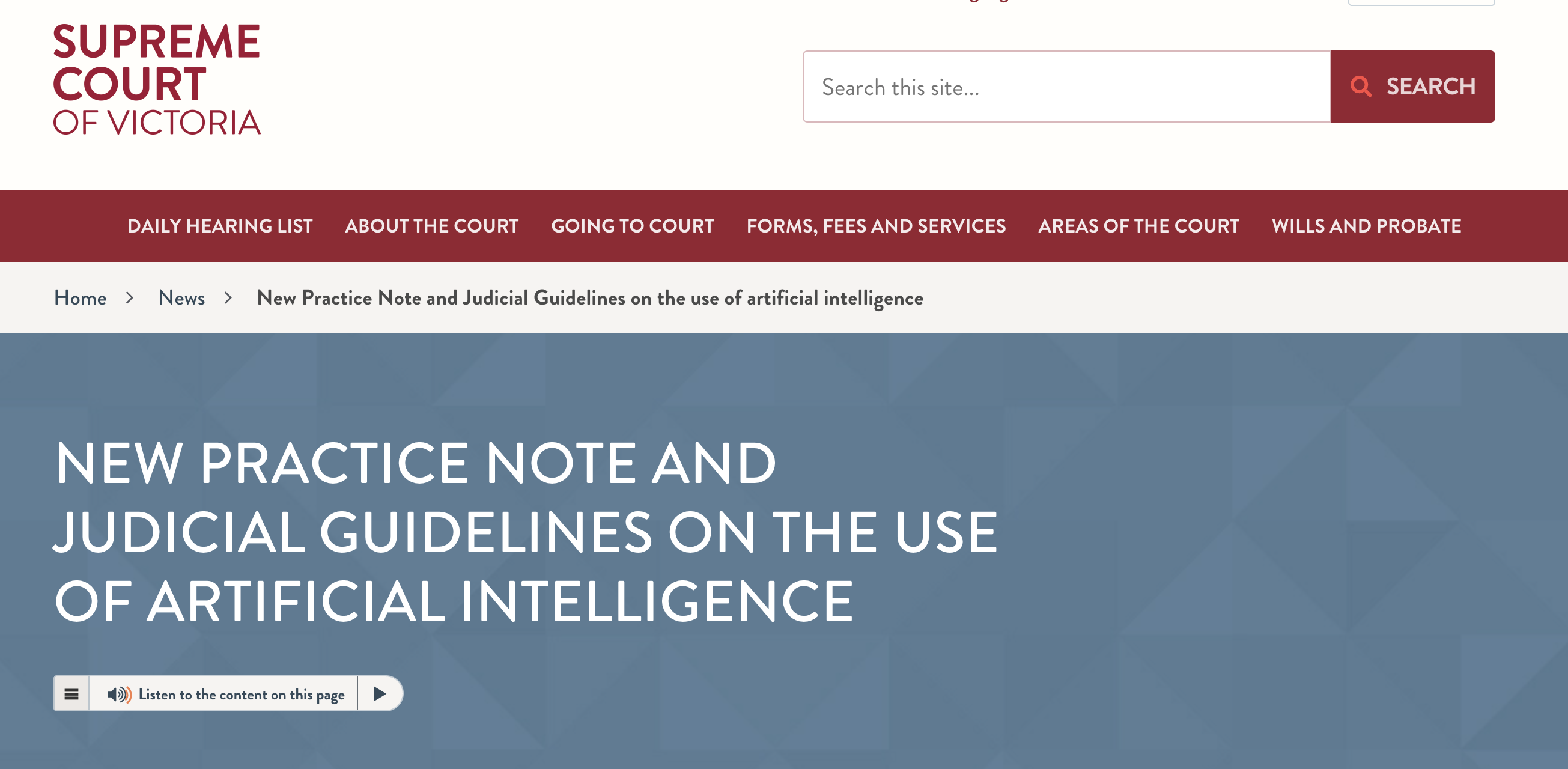
How to use AI responsibly in Victorian law: according to the Supreme Court
The Supreme Court of Victoria just released another new Practice Note and Judicial Guidelines for practitioners and judicial officers.
Legal AI is Dead?
Legal AI incumbents have continually projected doomsday statements as marketing strategies, claiming their new releases are so powerful that they mean the rest of the industry is rendered obsolete.
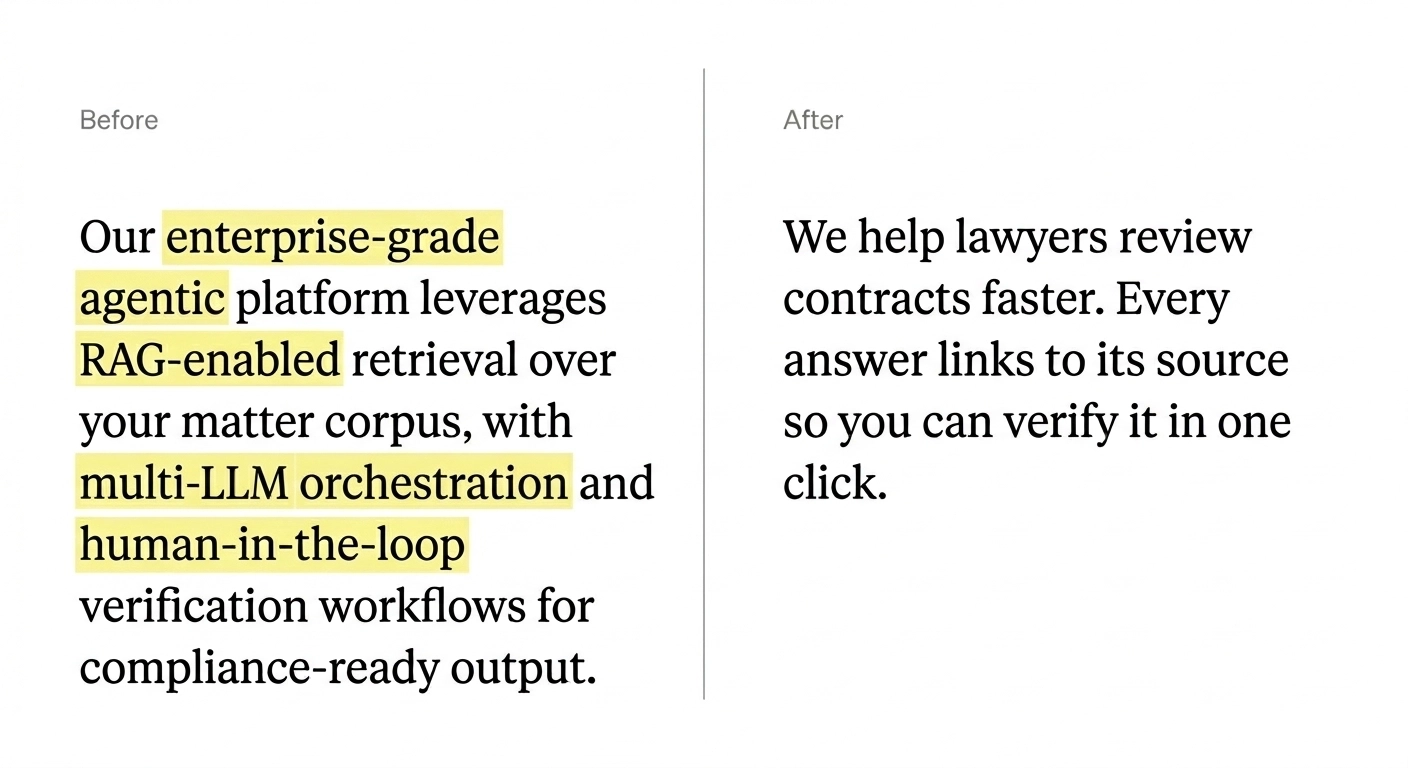
The acronym problem in legal AI
Acronyms become a problem when they obscure, rather than condense.
Three Worries about Harvey's 500-agent launch
Sometimes less is more.
Legal AI Hallucinations are Not Going Away
Cases where AI-hallucinated outputs are filed are only continuing to rise in incidence. We've compiled a summary, and our thoughts, below.
Legal AI for In-House Counsel: A Different Buying Decision
For in-house teams, legal AI is about extending bandwidth rather than driving margin. Questions every GC should be asking the vendors that come through the door.
The Flattening Pyramid: AI and Australian Law Firm Economics
AI is now widely used for the work juniors used to do, as shown by the productivity data. This fact presents significant implications for law firm pricing and structure.
Why Small Firms have an Advantage in the AI World
AI presents as an equalising tool: allowing those with smaller teams and faster adoption cycles to get ahead earlier.
AI in Commercial Litigation: The Core Use Cases in 2026
Commercial litigation is a document-heavy practice, and therefore a natural use case for models that can query across extensive datasets.
Federal Court GPN-AI: What It Means for Australian Legal Practice
The Federal Court of Australia published its Generative AI Practice Note (GPN-AI) on 16 April 2026.
What to Ask Before Your Law Firm Adopts AI: A Legal Procurement Guide
What you should ask before buying an AI tool
AI and the Billable Hour: How Australian Law Firms Are Adapting Their Pricing Models
The pricing question many firms are avoiding
AI Document Review and Privilege Risk in Australian Litigation: A Workflow Guide
How to keep privilege intact while using AI document review platforms
AI Disclosure Requirements in Australian Courts: What Your Firm's Policy Must Cover
What Australian Courts Actually Require from Your AI Policy
The Legal Landscape is Shifting to Reflect Increasing AI Adoption
Something shifted in Australian legal practice over the past 12 months, and it happened faster than most practitioners noticed.
Experience the Future of Law
Book a Demo



























































.png)