




The usual story about AI-hallucinated citations involves one lawyer, one firm, one embarrassing mistake. A case gets noted, a fine is issued, and the profession files the episode under "someone else's problem."
Last week's decision from the Northern District of Mississippi is harder to dismiss.
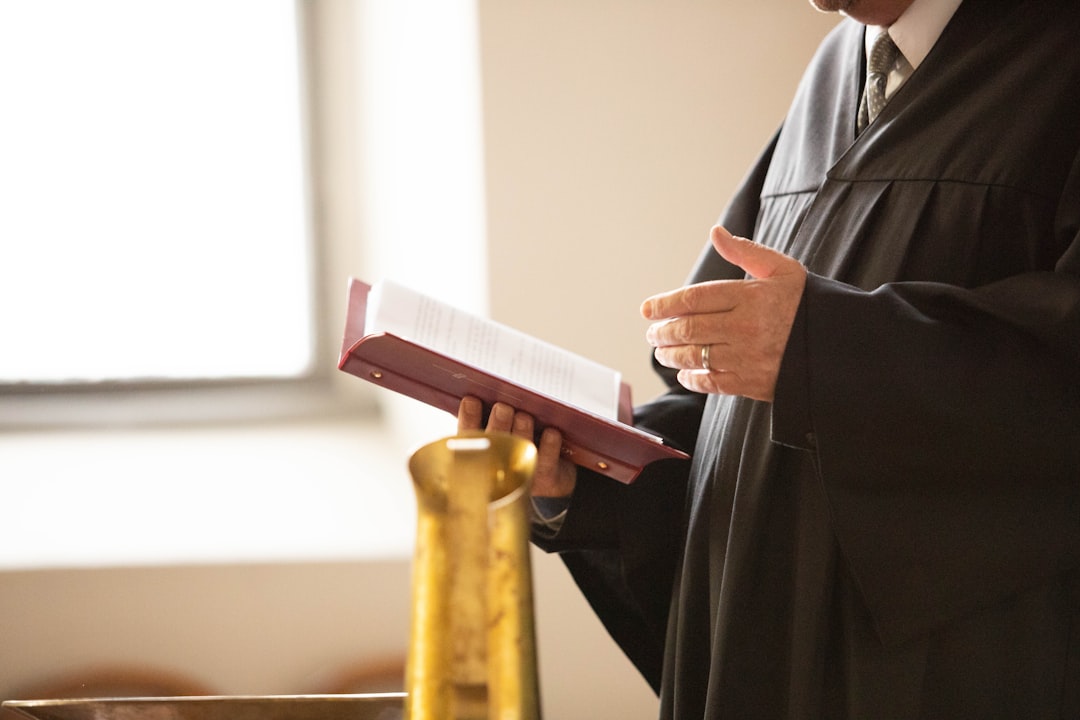
Senior US District Judge Sharion Aycock did not sanction one side. She suspended lead attorneys on both sides for two years from the district and issued financial penalties, finding that all four counsel "failed to verify the legal authorities cited in their respective filings in violation of Rule 11." The trial was paused entirely. One attorney, when pressed, reportedly argued she was unaware that AI could produce hallucinated citations. That was offered as a mitigation argument, in a federal court, in 2026.
Anyone building workflows on large language models understands that fluency and accuracy are different things; hallucinations are a known failure mode. The remarkable feature here is the symmetry. Two opposing legal teams, working independently, made the same category of error in the same matter. Neither side caught what the other had filed. The adversarial system, which is supposed to surface exactly this kind of problem, surfaced nothing.
The episode describes something more structural than a careless associate's shortcut. A workflow assumption has quietly spread through practice: that generated text is probably fine to file, and someone else will catch anything wrong.
We are not watching a foreign curiosity. The Federal Court's GPN-AI, signed by Chief Justice Mortimer on 16 April 2026, is explicit. Where AI has been used to prepare documents filed with the Court, the responsible lawyer must personally confirm that cited legal authorities exist and support the stated proposition. New South Wales has issued its own practice guidance along the same lines. The obligation does not attach to the AI. It attaches to the named lawyer.
These instruments were written anticipating exactly what happened in Mississippi. The defence that a practitioner did not know AI could hallucinate will not survive judicial scrutiny in any Australian jurisdiction that has issued guidance, which is now most of them.
There is a tempting inference from events like this: that mandatory AI disclosure requirements, if rigorous enough, would prevent the problem. We are sceptical.
Disclosure tells the court that AI was used. It says nothing about whether the output was read against a real source. The Mississippi lawyers presumably knew they were using AI. The failure was not in failing to disclose; it was in filing what the AI produced without checking it.
A disclosure rule, by itself, does not change the path of least resistance. If verifying a citation requires a practitioner to open a separate research tool, navigate a separate database, and manually confirm that the authority exists and says what the filing claims, the temptation to trust the generated text is structural, not personal. You would need to be unusually disciplined to do that routinely. Most practitioners are normally disciplined, which means they respond to friction. Where checking is hard, checking gets skipped.
The only durable fix is a workflow where the citation arrives already attached to the real source, where verification is built into the research step rather than appended as a downstream task.
This is the design choice we made at Habeas, not as a differentiator, but because it is the only workflow that makes the professional obligation dischargeable. Source-linked citations are the minimum condition for professional reliance. Every output from the platform links back to the underlying document in a closed Australian corpus spanning over 300,000 cases and pieces of legislation. The authority and the answer are not separate things a practitioner has to reconcile after the fact; they arrive together.
Barristers running authority gathering on Habeas, one of the core touchpoints in their daily workflow, work from citations already grounded in verified Australian sources. The research step and the verification step are the same step. Foundational research that once required a full morning can be completed in minutes, without the tradeoff between speed and confirmable accuracy that the Mississippi outcome illustrates.
That matters for reasons beyond efficiency. Verification cannot be a step tacked onto the end of the research process. Once you have drafted the submission, cited the authority, and moved on to the next issue, the check rarely happens with the rigour it deserves. The professional obligation has to be dischargeable at the point of research, not deferred to a final review that the filing deadline will compress.
For Australian practitioners, Judge Aycock's decision is a description of a systemic risk already present in their own workflows, with consequences already specified in instruments from their own courts. The window before an Australian judge issues a comparable decision is probably shorter than it looks.
The legal research in this article was conducted and every citation verified using Habeas, the Australian legal AI research platform.
Hero image: Benjamin Brunner on Unsplash
