




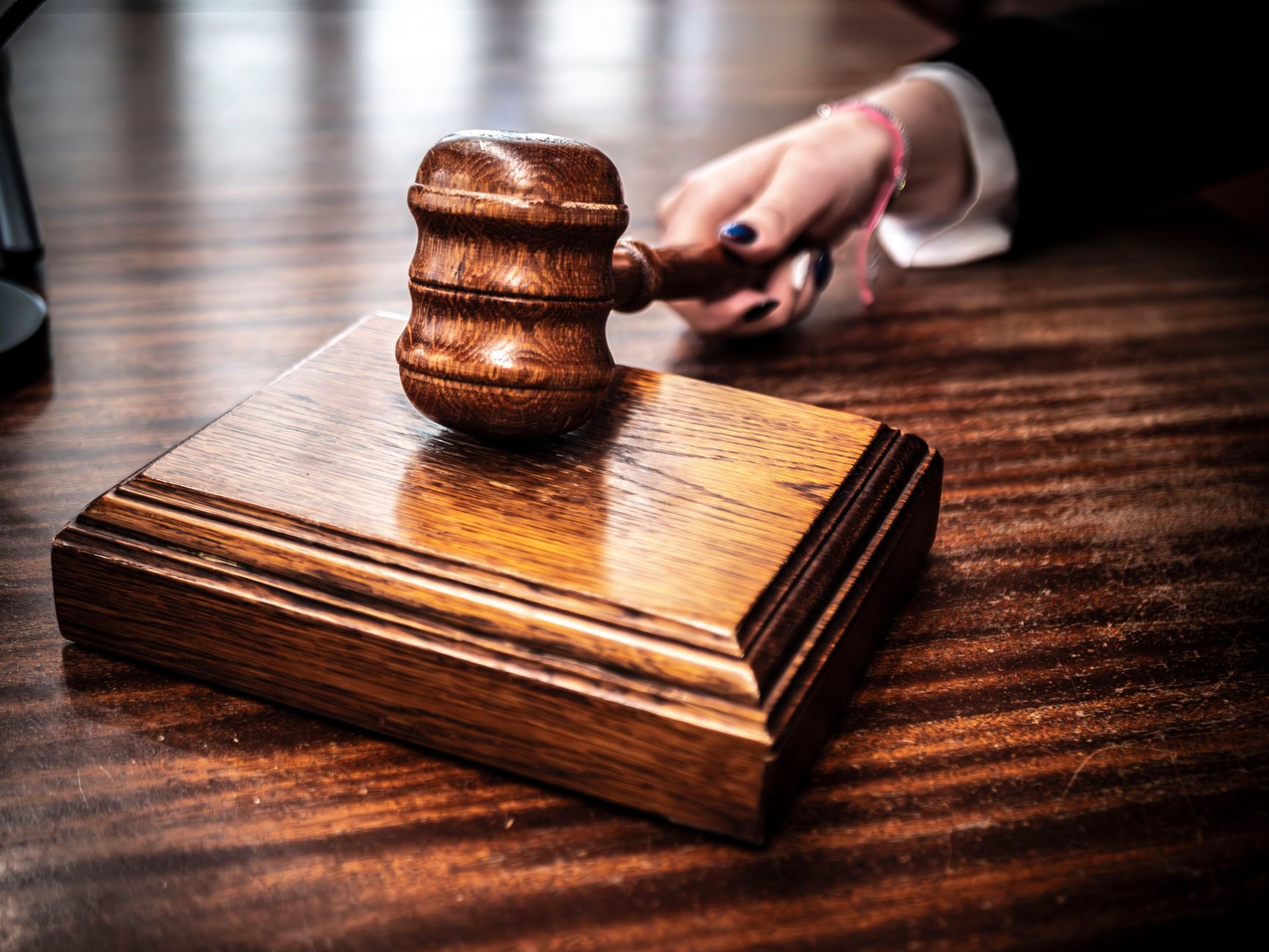
Australia's federal and state judicial leaders met with academic researchers this month to discuss a question that would have been improbable a year ago: which of their own tasks could AI assist with? Lawyers Weekly reported that the gathering brought together academics from Melbourne Law School and the National University of Singapore with leaders from the Federal Court, the Federal Circuit and Family Court of Australia, every state Supreme Court, the Fair Work Commission, and the Administrative Review Tribunal. The discussion moved past the familiar framework of "challenges and opportunities" and turned to specific judicial tasks AI could help with.
For the past two years, the Australian judicial conversation about AI has followed a predictable arc. A court issues a practice note and the profession adjusts. Then the next court issues its own version. The Federal Court's GPN-AI, signed by Chief Justice Mortimer, set the template by requiring practitioners to understand the technology and verify its output before relying on it. NSW, Queensland, Victoria, South Australia, and the Fair Work Commission each landed in broadly the same place. The guidance has been directed at lawyers, cautionary in register, telling the profession to protect privileged material from open models and to verify AI-generated output before it reached the court. Those instructions were necessary. Each assumed the judiciary's role was to regulate the profession's use of a technology the bench itself did not use.
This meeting moved the bench from regulator to prospective user. The distinction matters because the questions change. When a court regulates AI use by others, it can set the standard and step back. When a court considers using AI for its own tasks, the standard it sets for the profession becomes the standard it must hold itself to, and the design questions, including what to delegate and how to verify, become institutional questions about the integrity of the judicial process.
Chief Justice Alstergren's framing, as reported, was that the judiciary should respond deliberately "while safeguarding the principles of judicial independence, procedural fairness, and public confidence." The instinct is right. A judiciary that engages with the technology on its own terms, rather than waiting to be shaped by external pressure, is doing what an institution should. The question is what the engagement produces.
What it produced, according to the readout, was an agreement on future collaboration and knowledge-sharing. That is what these meetings yield at this stage, and it is a genuine starting point. But the gap between the ambition of the question and the modesty of the outcome deserves attention. The bench asked whether AI could assist with judicial tasks. What it took away was an agreement to keep talking.
Practitioners in Australia and overseas have filed court documents containing AI-fabricated citations. Correction processes have caught some. Others have survived the very step designed to catch them. These are practitioner failures, not judicial ones. They expose the structural question any delegation of judicial tasks to AI would collide with: confirming what the system produced before it enters a reasoning process.
The Alstergren principles each depend on a condition the readout did not name. Judicial independence means the judge's reasoning is their own. Procedural fairness means the parties can test the materials the decision relies on. Public confidence means the public can see that both hold. Each of those collapses if AI-generated analysis enters the judicial process without a method for tracing each proposition back to a verifiable source. A judge who uses AI to summarise a hundred-page evidence bundle, or to survey the relevant authorities on a novel point, needs the same thing a barrister needs when gathering cases for a submission: every claim in the output resolving to a primary source that can be checked.
This is where the judicial conversation and the practitioner conversation converge. The bench has not yet said publicly how it would hold its own use of AI to the same standard it imposes on the profession. That may come. This month's meeting suggests the question is at least on the table, even if the answer was not.
We think the verification question is the threshold that will determine whether AI moves from the periphery of judicial work toward anything more central. The judicial leaders who met this month opened the door to the design question. The harder question, the one the readout did not address, is how output is checked before it shapes a decision. Collaboration and knowledge-sharing can support that work. The substantive answer will have to be built into the tools themselves, into their architecture, before any judicial task is delegated to them.
A verification architecture for judicial AI use would share characteristics the Federal Court already expects of the profession. The system would need to reason over contained materials, protected from exposure to third-party models. Each proposition in its output would need to resolve to a specific document the user can open and read. The whole process would need to be auditable at the level of a specific task or judgment, so that the Court could answer the same disclosure question it now asks of lawyers: what tool was used, how, and for what purpose. These are design characteristics. They either exist in a tool or they do not, and no amount of collaboration between courts will substitute for their absence.
This is the territory Habeas was built for, and the design principles the judiciary will need are the ones we have staked the platform on. The Search Engine scans over 300,000 Australian cases and pieces of legislation in seconds, with results grounded in a closed dataset of legitimate Australian legal sources, so they are verifiable and traceable, never hallucinated. Every proposition in the output carries a reference that resolves to the source document. In a context where the output might inform a signed judgment or a filed submission, that traceability is what makes the tool usable. A tool that produces analysis without a trail back to primary law creates risk rather than reducing it.
We are not suggesting the judiciary should adopt any particular product, or that the design question the bench is now asking has a simple commercial answer. The Alstergren framing is the right one. But deliberation has to include a method for verifying what the system gives you, and that method has to exist before the task is delegated, not after the output appears. A judiciary that delegates tasks to AI without a verification architecture has accepted the output on trust, and the documented pattern of AI-fabricated citations in court filings shows what happens when verification is absent. The question the bench is now asking is a serious one. It will require a serious answer about verification, one that goes beyond an agreement to collaborate.
The guidance the courts have issued over the past year is consistent across jurisdictions because the underlying problem is consistent: AI generates plausible text, and plausible text is the enemy of verified text.
The verification standards the courts imposed on the profession are the same standards the bench will need for its own use of AI. When that moment arrives, the requirement will be the one Habeas was designed around: output that traces back to Australian primary law, every time, with a citation the reader can follow to the source.
Book a demo at habeas.ai.
If you want to try for yourself or get in contact, book a demo with us here. We also offer the capacity for self-serve individuals to sign up, and subscribe or register a free trial at app.habeas.ai.
The legal research in this article was conducted and every citation verified using Habeas, the Australian legal AI research platform.
