





‘Good legal research’ is a phrase often used but rarely defined. Those of us who have worked as research assistants, junior lawyers, or any other research role would have heard it regularly.
It is therefore worth attempting to explain what good legal research looks like.
At its core, good legal research is comprehensive, judicious, and defensible.
Good legal research is comprehensive in the sense that it, within reason, leaves no stone unturned. It is a question of coverage – whether every applicable source: legislation, binding and persuasive case authority, or even commentary where appropriate, has been considered.
Comprehensiveness does not require the inclusion of every conceivable source, but it does require reasonable confidence that the most relevant and authoritative material has been identified and considered. A research product that overlooks any relevant source within the jurisdictional boundaries of the case is incomplete.
Good legal research traverses all the ground that can reasonably be traversed.
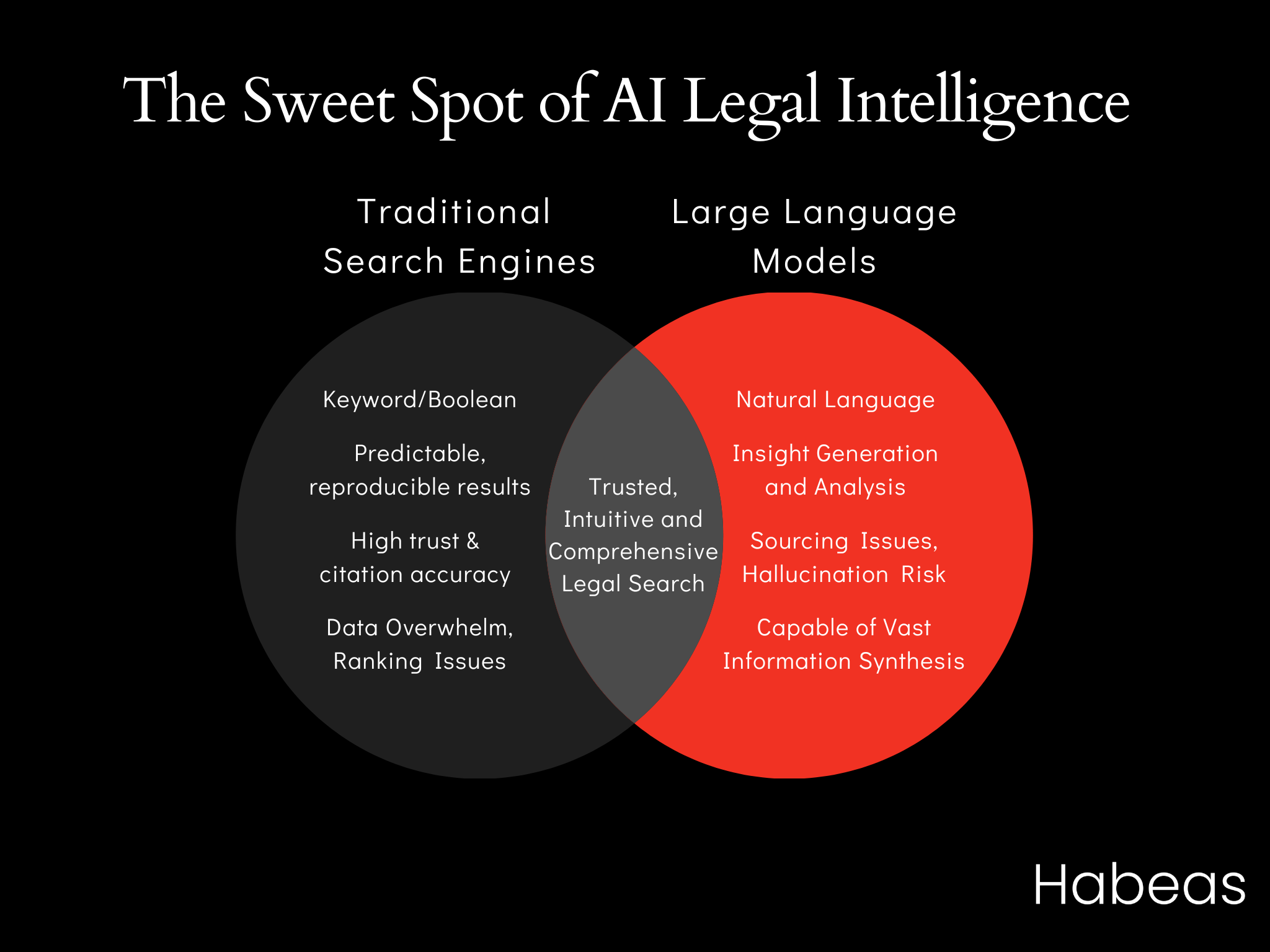
Habeas is comprehensive as a matter of design, being trained on a significant body of Australian law, it is programmed to scan all the relevant materials within the jurisdiction to produce an output.
However, good legal research is not about retrieving everything possible - good legal research is judicious. It is judicious in the sense that good legal research requires professional judgment to determine which sources matter most. Supervising lawyers rarely want to read every authority that was considered, but they do want to read the authorities that were assessed to be beneficial, and to understand why.
It is judgment, not volume, that transforms research from a random collection of sources into a useful analytical tool.
Finally, good legal research is defensible.
That is, the researcher must be capable of explaining why particular authorities were relied upon, how they support the propositions advanced, and if necessary why alternative sources were not preferred. This matters because legal research is often a preliminary task rather than being the endpoint, being subject to review by supervisors, and challenged by adversaries in the court setting.
Research that cannot be justified under scrutiny has the effect of imposing risk on those reliant on it. Conversely, defensible legal research allows lawyers to stand behind their work with pride and confidence, in the knowledge that the reasoning and sources therein can be both articulated and rigorously examined.
In practice, the qualities of comprehensiveness, judiciousness, and defensibility are not easy to balance. This is because research that aims to be comprehensive can lead to an unmanageable workload, while overly judicious research risks omitting relevant material. In a similar vein, research that is defensible under scrutiny often requires significant care and time in and of itself: time that is taken away from the judicious selection of sources from a comprehensive dataset.
Good legal research involves navigating these tensions rather than attempting to resolve their existence entirely. The task is not to maximise one quality at the expense of the others, but instead to produce work that appropriately balances each in light of the relevant matter.
This balance is why legal research remains a professional skill to be supplemented, not yet replaced, by AI tools. AI tools are beneficial to the extent that they provide a more efficient route to a defensible conclusion, but that conclusion still must be independently evaluated by lawyers. Habeas provides a superior route to such independent evaluation by transparently citing the sources on which it relies and through which it reasons. Habeas is a good legal research assistant: it never clocks off, judiciously selects from a comprehensive dataset, and, importantly, defends its reasoning.
Together, these qualities represent our attempt to provide a working definition of ‘good legal research’: being research that considers available materials comprehensively, is judicious in the sources it accordingly prioritises, and is defensible under scrutiny.
As legal research tools continue to evolve, this definition, we submit, is a useful benchmark. Any system of process that claims to support legal research should be assessed against these criteria – not by its capacity to retrieve information, but by whether it assists lawyers in producing research outputs that meet these standards.
If you want to test Habeas against our own standards, you can book a direct and personalised demo here.
